
How much money are Texas weather patterns costing you right now?
If you own a brick or stone structure in Texas, the answer might surprise you. Every heat wave, thunderstorm, and cold snap creates damage that adds up over time. Most of this Texas weather masonry damage happens slowly and quietly, hiding behind walls or in places you rarely check. By the time you notice the problem, repairs often cost far more than prevention would have.
In this blog, you’ll explore the relationship between Texas weather and masonry damage. You’ll learn which weather events cause the most harm, how to catch problems while they’re still small and affordable, and what maintenance steps actually prevent damage.
Key Takeaways
➤ Texas weather patterns, including extreme heat, freeze-thaw cycles, heavy rain, hail, and expansive clay soil, steadily weaken brick and stone structures over time.
➤ Freeze-thaw cycles and moisture infiltration are leading causes of spalling, cracked mortar, and long-term structural deterioration.
➤ Warning signs such as efflorescence, bulging walls, loose bricks, and interior water stains indicate hidden Texas weather masonry damage.
➤ Preventive steps like proper drainage, breathable sealants, flashing, and routine inspections significantly reduce repair costs.
➤ Early detection and timely repairs protect property value and prevent small masonry issues from becoming major structural failures.
What Is the Weather Pattern in Texas?
Texas weather is famous for its lack of moderation. From the blistering sun of the Panhandle to the heavy humidity of the coast, every region presents a unique set of challenges. Here’s a closer look at how these specific patterns impact the structural integrity of your masonry:
1. Temperature Swings
North Texas experiences 40°F to 60°F temperature changes within 24 hours. That might sound like a weather report stat. But for your brick walls, it means constant expansion and contraction.
When a brick heats up, it expands. When it cools down, it shrinks. Do this enough times, and cracks start forming. This is why regular inspections are often recommended by experts through masonry services in Texas.
2. Seasonal Extremes Across the State
⬥ Summer brings the heat. Many Texas areas see 100°F+ temperatures for 90+ days straight. Brick and mortar bake under intense UV rays. Colors fade. Mortar joints weaken.
⬥ Winter surprises with freezes. Remember Winter Storm Uri in February 2021? Temperatures in Dallas hit -2°F. That was the coldest reading since 1949. All 254 Texas counties were under winter storm warnings for the first time ever.
⬥ Spring delivers heavy storms. Rainfall floods foundation areas. Water finds every tiny crack and gap in your masonry.
⬥ Fall creates unpredictable patterns. You might need your heater one morning and your AC by afternoon.
3. Regional Differences
⬥ North Texas (Dallas-Fort Worth): More freeze-thaw cycles hit this region. Your brick faces 10 to 15 freeze-thaw cycles each winter.
⬥ Houston area: High humidity (75%+) plus heat creates a different challenge. Moisture stays trapped in the brick longer. Mold growth becomes a real issue.
⬥ Central Texas (Austin-San Antonio): Rapid temperature changes are the biggest enemy here. Your masonry doesn’t get time to adjust.
⬥ West Texas: Extreme heat plus dry conditions mean different damage patterns. UV degradation speeds up.
According to NOAA’s National Centers for Environmental Information (NCEI), from 1980 to 2024, Texas experienced 190 confirmed weather disasters with losses exceeding $1 billion each. Your masonry bears the brunt of these extreme conditions year after year.
How Weather Affects Masonry in Texas
Over time, the cumulative effect of shifting temperatures, moisture, and wind can take a toll on even the most solid structures. Understanding these specific local patterns is the first step in protecting your property. Here’s a breakdown of how the Texas climate impacts your masonry throughout the year:
1. Freeze-Thaw Cycles: The Silent Destroyer
Water seeps into your brick through tiny pores. It sits there. When temperatures drop below freezing, that water turns to ice. Ice expands by roughly 9%. Those tiny pores become bigger cracks.
When it thaws, the water shrinks back. But the damage is done. The crack stays bigger than before.
In North Texas, this happens 10 to 15 times every winter. Each cycle makes the damage worse.
You won’t see major problems after one winter. But after 5 to 10 years, spalling starts appearing. The brick face begins flaking off. Older bricks from before the 1980s. Also, any brick that wasn’t properly sealed.
2. Extreme Heat & UV Exposure
Summer heat does more than make you uncomfortable.
When brick heats up to extreme temperatures, it expands. A 100-foot brick wall can expand up to half an inch during peak heat. That creates stress on mortar joints.
UV rays break down the mortar over time. The cement particles weaken. Joints become sandy and crumbly.
You’ll also notice color fading on south and west-facing walls. This isn’t just cosmetic. It signals that the brick’s protective surface is wearing away.
3. Heavy Rainfall & Moisture Infiltration
Texas can go from drought to flood in days. Your masonry wasn’t built for that kind of moisture assault.
Efflorescence is often the first sign. Those white, powdery deposits appear on your brick surface. It happens when water carries soluble salts through the masonry. The water evaporates on the surface, leaving salt deposits behind.
Efflorescence indicates trapped moisture. That moisture can lead to mold growth inside the walls. It weakens mortar bonds. Eventually, water finds its way to your interior walls.
Mortar erosion accelerates with heavy rain. The joints that hold your bricks together slowly wash away.
4. High Winds & Storm Damage
Texas averages 155+ tornadoes per year. Even if a tornado doesn’t hit your property directly, high winds create problems.
Severe storms bring wind speeds of 70 to 130 mph. Those winds can dislodge loose bricks. They put pressure on tall structures like chimneys.
Flying debris during storms directly impacts brick surfaces. A tree branch at 80 mph creates severe damage.
5. Hail Storms
North-Central Texas sits in “Hail Alley.” Hailstones the size of golf balls or larger hit brick surfaces with tremendous force.
Surface pitting is the immediate damage. But those surface pits allow water to enter the brick. That sets up future freeze-thaw damage.
Most policies cover sudden hail damage. But you need to document it quickly.
6. Humidity & Condensation
In Houston and other Gulf Coast areas, 75%+ humidity is normal. Your brick absorbs that moisture.
The problem is—the brick needs to dry out between wet periods. High humidity means slower drying times. Constant moisture creates perfect conditions for mold.
Mortar joints stay damp longer. They weaken faster than in drier climates.
7. Drought & Soil Movement
Texas sits on expansive clay soil. That soil swells when wet and shrinks when dry.
During droughts, soil pulls away from foundations. That affects any masonry attached to the foundation. Chimneys develop separation gaps. Walls crack in diagonal patterns.
Expansive clay soil is responsible for most foundation movement issues. And foundation movement always affects masonry structures.
What Are the Warning Signs of Texas Weather Masonry Damage?
Early detection saves thousands. Use this property inspection checklist twice yearly to spot warning signs before damage becomes costly structural problems. Follow a reliable guide for masonry services to ensure proper maintenance and evaluation.
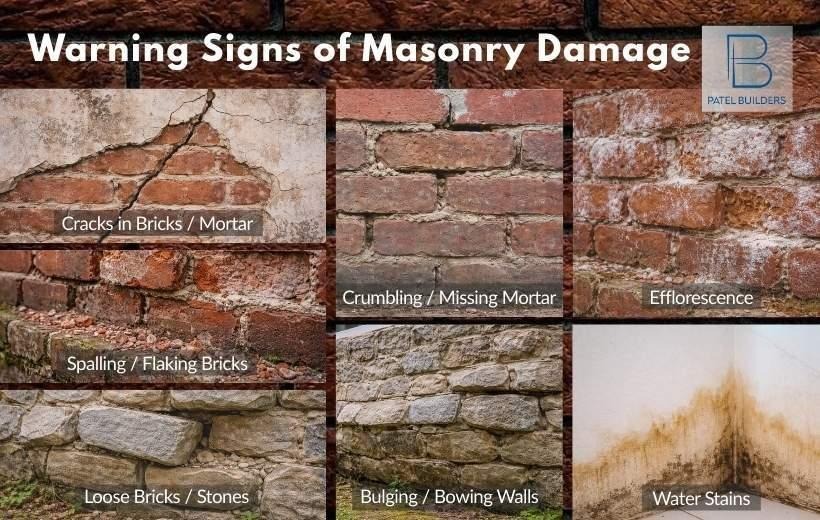
(i) Cracks in bricks or mortar: Hairline cracks differ from structural failures. Learn which cracks need immediate masonry repair services in Texas and which can wait. Quarter-inch width determines professional assessment necessity.
(ii) Crumbling or missing mortar: Touch-test mortar joints for softness or crumbling. A failed mortar lets water penetrate walls, reducing structural support. Repointing restores protection after deterioration occurs.
(iii) Efflorescence (white powdery residue): White crystalline deposits indicate water moving through masonry, dissolving internal salts. This visible symptom reveals hidden moisture problems causing freeze-thaw damage progression in brick masonry Texas climate structures.
(iv) Spalling or flaking bricks: Brick faces flaking or peeling indicate freeze-thaw damage. Spalling progresses rapidly from small pits to complete face loss, requiring brick replacement solutions.
(v) Bulging or bowing walls: Outward bulging or inward bowing signals serious structural failure from trapped moisture, corroded ties, or foundation movement affecting brick and stone masonry Texas weather resilience. Immediate professional evaluation prevents collapse.
(vi) Loose bricks or stones: Wiggle-test accessible bricks for movement. Loose masonry indicates failed mortar, creating falling hazards and water entry gaps requiring immediate repair before injury.
(v) Interior warning signs: Water stains, drafts, basement moisture, sticking doors, and musty odors inside reveal exterior damage. Interior symptoms demand immediate exterior investigation and masonry repair services Texas.
How to Prevent Brick Stone Structures From Masonry Damage Texas?
Prevention costs less than repair. Implement these five proven protection strategies to extend masonry lifespan, prevent Texas weather masonry damage, and maintain property value.
1. Schedule regular professional inspections: Biannual inspections catch problems early. Spring reveals freeze-thaw damage while fall prepares structures for winter. Professional assessments identify issues before costly masonry repair services Texas, which makes timing critical when choosing a masonry contractor.
2. Apply proper sealing and waterproofing: Breathable sealants repel exterior water while allowing interior moisture vapor escape. Apply every five to seven years to prevent water infiltration and damage.
3. Ensure proper drainage: Direct water away from masonry structures through clean gutters, properly positioned downspouts, correct grading, and drainage systems. Water causes most masonry damage.
4. Install flashing and weep holes: Flashing directs water from wall cavities while weep holes allow drainage. Proper installation at critical points prevents trapped moisture and subsequent structural damage.
5. Keep trees and vegetation managed: Maintain a twenty-foot distance between trees and structures. Remove climbing vines trapping moisture. Trim overhanging branches while preserving beneficial shade, reducing UV exposure.
Time to Give Your Masonry the Care It Deserves!
Texas weather relentlessly tests your masonry through extreme heat, moisture, and freezing cycles. From spalling bricks in North Texas to humidity-driven mold in Houston, these environmental stressors cause quiet but costly structural damage over time.
To preserve your property’s value and integrity, you must proactively manage drainage, apply breathable sealants, and monitor for warning signs like efflorescence or crumbling mortar.
Don’t wait for small masonry cracks Texas to become expensive failures. Take action today by inspecting your property and scheduling a professional assessment to ensure your brick and stone structures remain resilient for years to come.
Patel Builders offers comprehensive inspection and masonry repair services Texas designed for local conditions. Our skilled professionals identify vulnerabilities and implement proven protection strategies. Reach out to us today or call +1 (516) 205-0420 to safeguard your masonry investment today!
Frequently Asked Questions (FAQs)
1. How does Texas heat affect brick masonry?
Texas heat makes brick masonry expand during the day and contract at night. This stress causes mortar cracks, spalling (flaking), and structural shifts. High temperatures weaken mortar, speed up fading, and, when paired with clay soil movement, can create severe foundation-related structural cracks.
2. Can rain damage brick and stone masonry?
Yes, rain can seriously harm brick and stone masonry over time. Masonry materials are porous, so they soak up water. This leads to cracks, crumbling mortar, and structural instability. Common problems include freezing and thawing cycles that chip off brick faces (spalling), white powdery stains (efflorescence), and mold growth.
3. Why do masonry cracks appear after weather changes?
Masonry cracks after weather changes due to water infiltration, thermal expansion/contraction, and ground movement. In winter, water that seeps in freezes and expands, leading to cracks and spalling.
In warmer, dry periods, soil, especially clay, shrinks. This shrinkage can cause the foundation to settle. At the same time, hot sun makes materials expand and contract, which breaks mortar joints.
4. Is freeze-thaw damage common in Texas masonry?
Yes, freeze-thaw damage (often causing spalling or surface flaking) is a common problem in Texas masonry, especially in the northern and central regions.
Texas has mild winters, but rapid temperature changes—shifting from warm, humid days to freezing nights—create ideal conditions. This allows water trapped in bricks to expand and crack the surface.
5. When should weather-related masonry damage be repaired?
Weather-related masonry damage should be repaired in spring or summer, when temperatures are between 40°F and 90°F. This ensures proper mortar curing and fixes issues like cracking, spalling, or water infiltration.
Prompt masonry repair services Texas after winter, or before the next cold season, help prevent structural damage from water penetration, freezing, and thawing.