
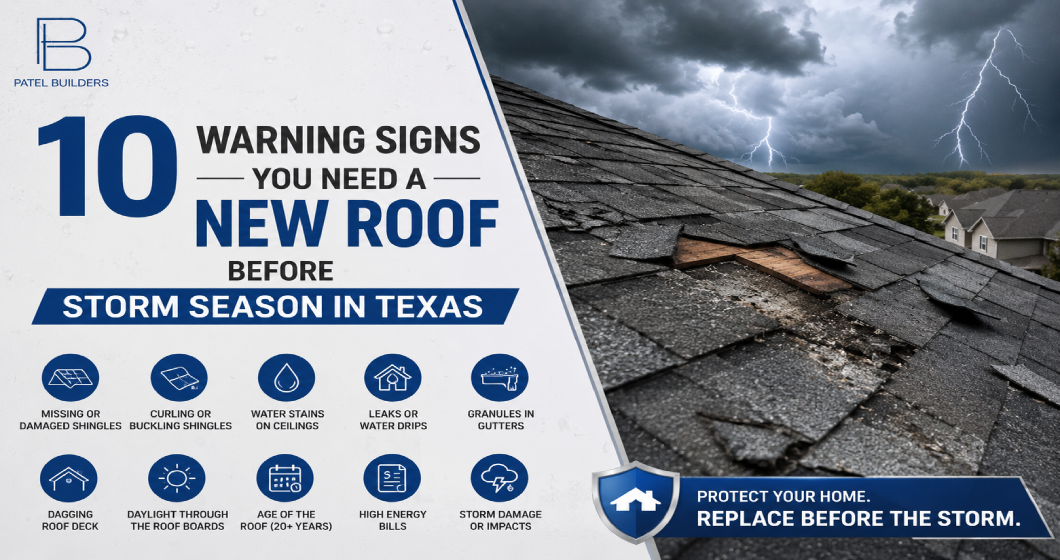
A roof rarely fails all at once. If you’re looking for signs you need a new roof before storm season in Texas, don’t wait for a major leak to make the decision for you.
If you live in Dallas or anywhere across the state, heat, hail, wind, and hard rain can turn a small roofing issue into a big bill fast. By May, Texas is already in the rough part of hail season, and hurricane season starts June 1. The smart move is to catch the warning signs early, before you end up with emergency repairs, interior water damage, or an insurance mess.
If you want help from a local team, you can also learn more about Patel Builders and the services they offer homeowners across Texas.
Key Takeaways before you inspect your roof
- Small roof problems don’t stay small for long in Texas weather.
- Age matters, but age plus visible wear is the bigger red flag.
- Hidden damage often shows up after the first heavy rain, not before it.
- May is the right time to inspect, document, and fix issues before storm season ramps up.
- If you’re in Dallas, don’t guess from the driveway alone. Check the attic, scan the roof from the ground, and schedule a professional inspection if anything looks off.
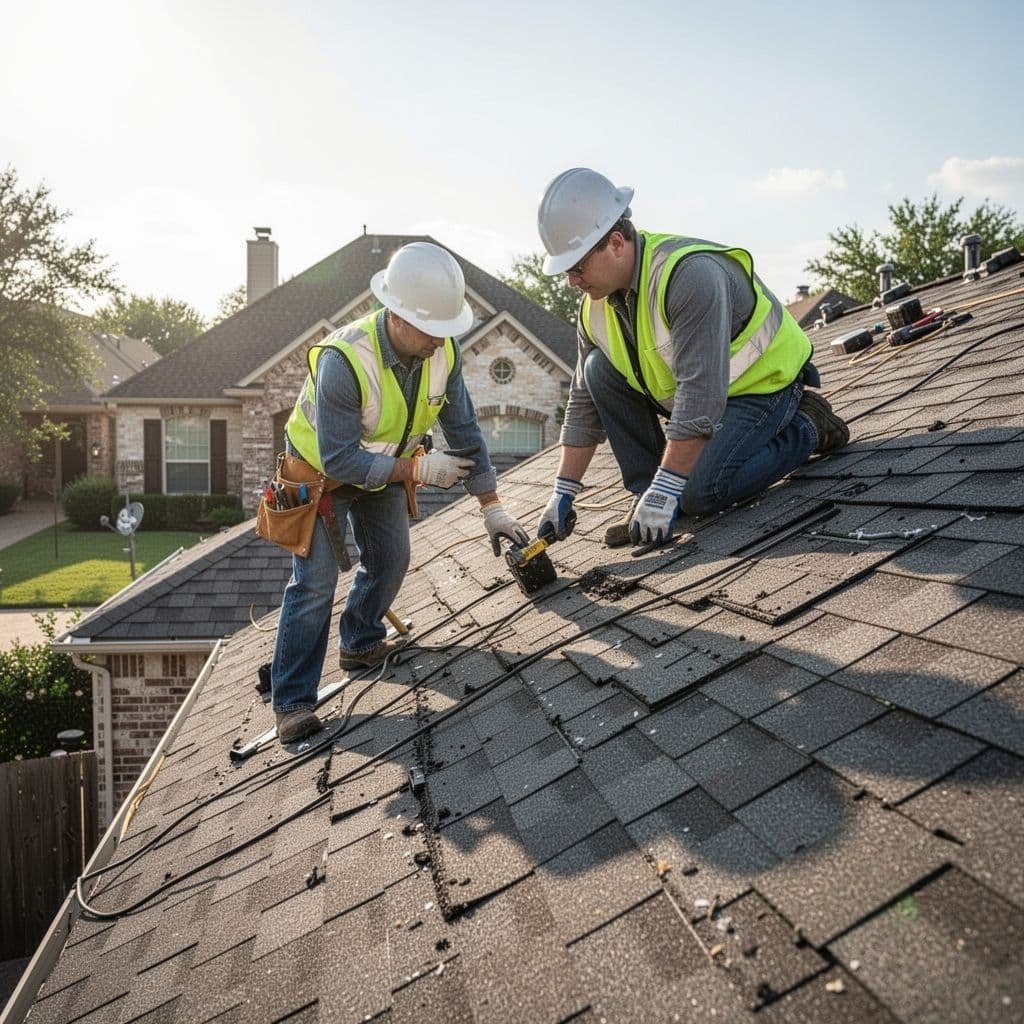
A roof can look fine until the next storm tests every weak spot.
When age and wear are signs you need a new roof
Texas sun is hard on roofing materials. Long stretches of heat dry out shingles, while sudden storms hit them with wind uplift, hail impact, and heavy water flow. That cycle wears a roof down faster than many homeowners expect.
Age alone doesn’t always mean replacement. An older roof that’s still solid may only need maintenance. But when age shows up alongside visible wear, you’re usually looking at one of the clearest signs you need a new roof.
For more local guidance, you can also read Top 5 Signs You Need a New Roof for a more focused breakdown of the biggest warning signs.
1. Your roof is 15 to 20 years old, or older
Many asphalt shingle roofs are expected to last around 15 to 25 years under good conditions. In Texas, that timeline can shrink. Constant UV exposure, high attic temperatures, and storm hits all speed up aging.
If your roof is pushing 15 to 20 years and you’ve already had a few repairs, storm season becomes a bigger gamble. Older shingles lose flexibility. They crack more easily, seal less tightly, and resist hail and wind less effectively.
That doesn’t mean every older roof must go. It does mean you should stop thinking in terms of maybe next year and start planning before the next line of storms rolls through.
2. Shingles are curling or cracking
Curling edges and cracked surfaces tell you the shingle is drying out. Once that protective top layer breaks down, water can work its way underneath.
This is more than a cosmetic issue. Curling shingles catch wind more easily, and cracked shingles leave the underlayment exposed. That’s how a roof starts losing its ability to shed water the way it should.
3. Shingles are missing after a windy day
A few missing shingles might look like a small patch job. Sometimes it is. But in storm-prone parts of Texas, missing shingles often point to broader roof failure.
If one section blew off, the surrounding shingles may be loose too. The seal strip may already be failing across a much larger area. That’s why a simple replace a few tabs fix doesn’t always solve the real problem.
If you need local help, a Roofing Contractor in Dallas can inspect the damage and tell you whether repair or replacement makes more sense.
Moisture damage you can see inside your home
Interior clues matter because they usually show the problem has been there for a while. Water rarely comes in one day and announces itself. It sneaks, spreads, and stains.
When you see signs indoors, the roof may already have a weak deck, worn flashing, damaged underlayment, or a leak path that keeps reopening.
4. You see water stains on ceilings or walls
Brown spots, bubbling paint, and damp drywall are classic leak signs. Even a light stain matters. It means water got past the roofing system and into the house.
The tricky part is that the stain may not sit directly below the roof damage. Water can travel along rafters or decking before it finally shows up on a bedroom ceiling or hallway wall. So if you spot a stain before a Texas rain event, treat it like a warning, not a mystery you’ll solve later.
5. The attic has daylight, damp insulation, or musty smells
Your attic tells the truth fast. If you see daylight through the roof boards, there are openings where there shouldn’t be any. If insulation feels wet or compressed, moisture is getting in from above or condensing because ventilation is failing.
Then there’s the smell. A musty attic often means trapped moisture. That can lead to mold, wood rot, and a softer roof deck over time. When the attic starts showing damage, the rest of the house usually isn’t far behind.
Outdoor damage that signals bigger roof failure
You don’t need to climb on the roof to spot trouble. In fact, you shouldn’t if it’s steep, slick, or storm-damaged. A lot of the biggest warning signs are visible from the ground, around the gutters, or along the roofline.
And in Dallas, small exterior defects can get ugly fast once hail and driving rain hit them.
6. Granules are piling up in gutters and around downspouts
Those coarse granules on asphalt shingles protect against sun and weather. When they start washing off in large amounts, the shingle is losing its shield.
A few loose granules on a newer roof aren’t unusual. Heavy buildup after a storm is different. If the shingles look bald or patchy, the roof is wearing out. Texas heat and hail speed this up, which is why granule loss is one of the more reliable signs you need a new roof.
7. You notice sagging, soft spots, or uneven roof lines
This one is serious. A sagging section can mean long-term water intrusion, weakened decking, or structural damage below the shingles.
Soft spots are just as concerning. If the roof surface dips, bows, or looks wavy from the yard, don’t chalk it up to age and move on. Storm season puts extra stress on already weak areas, and that’s when a bad roof turns into a dangerous one.
If the roofline looks uneven now, it won’t look better after a hailstorm.
8. Moss, mold, or algae keeps coming back
Black streaks can be cosmetic. Moss and recurring mold are different. They usually mean moisture is sticking around longer than it should.
That can happen because drainage is poor, shade traps dampness, or the roofing material is too worn to dry properly. When growth keeps returning after cleaning, the roof is often telling you it has a moisture problem, not a cleaning problem.
Storm damage that can make replacement the smarter choice
A lot of storm roof damage Texas homeowners deal with isn’t obvious from the street. Hail bruises shingles. Wind loosens seal strips. Flying debris cracks edges and flashing. The roof may still look intact, right up until the next downpour.
That’s why roof damage after a storm should never be judged by curb appeal alone.
9. Hail, wind, or flying debris has already hit your roof
Hail can knock granules loose and bruise the asphalt mat underneath. Wind can lift shingles enough to break their seal, even if they settle back down. Tree limbs and airborne debris can damage valleys, vents, ridge caps, and flashing in one shot.
If your neighborhood took a strong storm, get the roof checked even if you don’t see a leak yet. Some of the worst storm damage shows itself weeks later, after water has had time to work under the roof covering.
If you want a deeper look at replacement options, see Roof Replacement Services Texas for more information on full roof replacement support.
10. You keep paying for roof repairs
A patch makes sense when damage is small and isolated. It stops making sense when the same trouble comes back every season.
If you’ve paid for multiple leak repairs, replaced shingles more than once, or chased water around different rooms, the roof may be done. At that point, you’re not saving money. You’re paying in installments for a replacement you haven’t done yet.
How to decide between repair and replacement before storm season
Here’s the simplest way to think about it: one weak spot can often be repaired, but a worn-out roof system usually can’t.
This quick comparison helps:
| Repair usually makes sense | Replacement usually makes sense |
| Damage is small and limited to one area | Damage shows up in several areas |
| The roof is still fairly new | The roof is 15 to 20 years old or older |
| Flashing or a few shingles failed | Shingles are brittle, curling, or missing across sections |
| No sagging or widespread moisture | Leaks, attic moisture, or sagging are already present |
If the left column sounds like your roof, a repair may buy you time. If the right column sounds familiar, replacement is usually the smarter call.
Repair may be enough when the damage is small and local
A few missing shingles after a wind event, minor flashing damage around a vent, or one small leak near a pipe boot can often be fixed without replacing the whole roof.
That’s especially true if the roof is still in good shape overall. The decking is dry, the shingles still have life left, and the problem came from one specific failure point.
Replacement is usually better when the warning signs keep adding up
When you have age, repeated storm hits, granule loss, multiple leaks, sagging, and worn shingles all at once, repair becomes a short-term bandage.
Replacing the roof before storm season can save you from emergency tarps, ceiling damage, and the scramble that follows a big Dallas storm. It also gives you a clear baseline for insurance documentation and future maintenance.
Protect Your Home Before the Next Texas Storm
Most signs you need a new roof show up before a major leak, not after. That’s the good news. You usually get a warning. The problem is that Texas weather doesn’t give you much time to ignore it.
If your roof is older, showing visible wear, or acting up after storms, get it inspected now. A clear answer today is cheaper than soaked insulation, stained ceilings, and emergency calls tomorrow.
If you’re in Dallas, book a roof inspection, ask for a replacement estimate, and contact Patel Builders, Inc before storm season hits full force.
If you want, I can also place this link into the full article and give you the final cleaned-up version with all internal links in one place.