
Most roof replacements in Dallas don’t fail because of bad materials. They fail because of skipped steps, missed permits, and contractors who moved too fast. When you don’t know what the process looks like, you can’t tell if your roofing contractor Dallas TX is doing it right.
In this blog, you’ll walk through every stage of the roof replacement process, from damage assessment and material selection to permits, installation day, and long-term maintenance.
You’ll know what happens during roof replacement at each step, what to prepare for before the crew arrives, and what your contractor should be doing and delivering before the job is considered complete.
Key Takeaways
➤ Roof replacement Dallas requires a structured process, from inspection and material selection to permits, installation, and final inspection, to ensure long-term durability.
➤ Common signs like aging shingles, storm damage, leaks, and sagging indicate when replacement is necessary rather than repair.
➤ Proper permits, HOA approvals, and code compliance are essential to avoid legal issues and protect warranties.
➤ Installation day involves noise, debris, and safety precautions, requiring preparation for minimal disruption.
➤ Final inspection, warranty registration, and regular maintenance ensure your new roof performs well for years.
When Do You Need a Roof Replacement Dallas TX?
While regular maintenance can help, there eventually comes a time when repairs are no longer enough to keep your house safe. The following roof replacement warning signs indicate that it may be time to consider a full replacement for your property:
1. Age: If your roof is over 15–20 years old, it’s nearing the end of its life, especially with common 3-tab shingles.
2. Severe weather damage: High-impact hail and wind storms in North Texas can lead to replacements sooner than what manufacturers’ warranties state.
3. Visible damage: Cracked, curling, or missing shingles, particularly after a storm, indicates compromised protection.
4. Granule loss: Finding a significant amount of granules in gutters indicates the shingles are breaking down.
5. Leaks and interior water damage: Recurring leaks or water stains on the ceiling suggest the underlayment has failed.
6. Sagging roofline: A sagging roof indicates structural damage to the decking, which requires immediate attention.
Step-by-Step Roof Replacement Process Dallas
Having a clear roadmap of the roof replacement steps helps you understand what to expect at every turn, from the first inspection to the final city sign-off. By following a structured approach, you can ensure your new roof is built to last and fully protects your investment for years to come.
Stage 1: The Free Roof Inspection and Damage Assessment
Every professional roof replacement service starts here. A thorough inspection has three parts: a ground-level walk, an on-roof examination, and an attic check.
At ground level, the inspector checks gutters for granule buildup, soffits for rot, and window frames for water stains.
On the roof, they examine shingle condition, flashing integrity, pipe boots, ridge cap, ventilation, and deck health. Everything gets documented with photos.
In the attic, they look for water stains, daylight gaps, mold, and ventilation problems. You receive a written report with a clear scope of work before any roof replacement cost conversation begins.
Stage 2: Choosing the Right Roofing Material for Dallas, Texas
Dallas sits in Hail Alley. Summers sometimes exceed 100°F. Your roofing material needs to handle both.
Class 4 impact-resistant shingles are the obvious first option for most DFW property owners. They resist hail damage and can lower your insurance premiums by 10–30%. For commercial flat roofs, TPO is the most practical choice. For long-term investors, standing seam metal offers the lowest lifetime cost.
Patel Builders also handles HOA submissions and verifies Dallas Residential Code 2021 compliance before material selection is finalized.
Stage 3: Getting Your Quote, Contract, and Scope of Work
A legitimate estimate breaks down every line item: tear-off, underlayment type, ice and water shield, flashing, drip edge, permits, cleanup, and both warranty terms. A single total number with no breakdown is a red flag.
Under Texas Insurance Code Chapter 707, waiving your deductible is illegal. Patel Builders never does it.
Stage 4: Permits, Dallas City Compliance, and HOA Approvals
Full roof replacements in Dallas require a permit from the City of Dallas Building Inspection Department. Skipping it can void your warranty and create problems at resale.
Permits usually take 1 to 2 weeks. HOA pre-approval requires material specifications, photos, and contractor license information. Patel Builders handles all of it on your behalf.
Stage 5: Pre-Installation Preparation — What You Need to Do Before Day One
Clear the driveway, move vehicles, secure attic belongings, take down wall art on upper floors, and arrange care for children and pets. Notify neighbors about the noise. Materials arrive the day before. Property managers should notify tenants in writing at least 48 hours ahead.
Stage 6: Installation Day — What Happens Hour by Hour
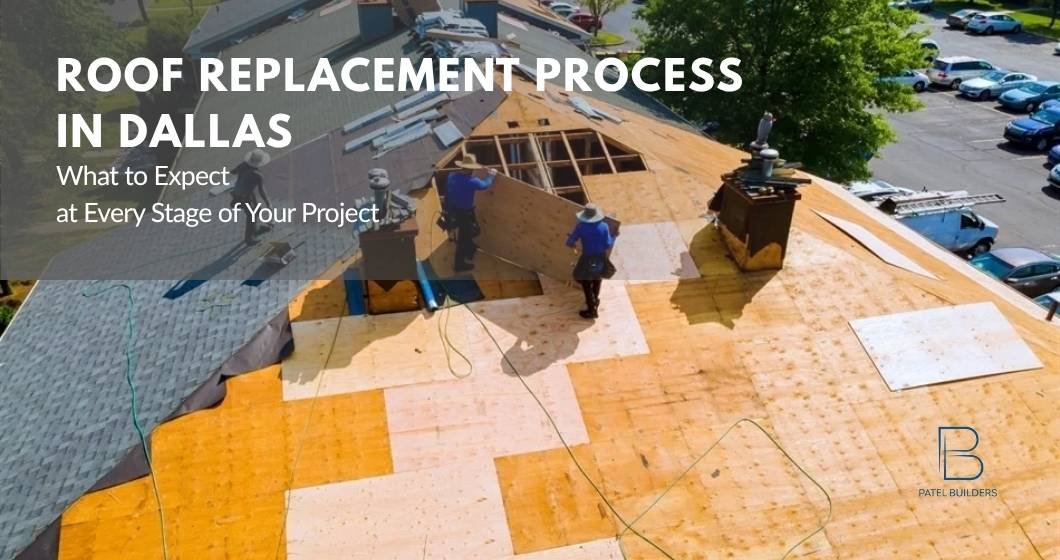
The crew lays tarps over landscaping and positions the dumpster. Full tear-off begins around 8 AM. Damaged decking gets replaced at midday. Synthetic underlayment and ice and water shield go down next, followed by new flashing at every penetration point.
Shingles go on from the eave up to the ridge cap. The crew finishes with a full magnetic nail sweep and debris haul-away.
Stage 7: The Final Inspection and Project Walkthrough
Walk the completed job with your roofing contractor Dallas TX. Check shingle alignment, flashing at all penetrations, ridge vent installation, drip edge, and a clean yard and gutters. The city building inspector signs off on the permit separately. Take photos and keep them in your property records.
Stage 8: Warranties, Documentation, and Long-Term Care
You receive two warranties in writing. The manufacturer’s warranty covers material defects for 25 to 50 years. The workmanship warranty covers installation errors. Register your warranty within 30 to 90 days of completion.
For long-term care, inspect annually, clean gutters every 6 months, trim trees 10 feet back from the roof, check flashing after storms, and keep soffit vents clear. After any DFW hail event, call for a professional inspection. In Texas, your claim window is one year from the storm date.
How Roof Replacement Dallas TX May Affect Your Day
Roof replacement is a highly active, fast-paced process that essentially turns your property into a busy construction site for a few hours. Understanding how this will change your normal routine can help you do the roof replacement preparation ahead so that the project feels like a minor disruption rather than a major headache.
Here’s what you can expect when the crew arrives to begin the work:
1. High Noise Levels and Vibrations
Constant noise: From about 7:00 or 8:00 AM until late afternoon, you’ll hear loud banging, hammering, nail guns, and the sound of old shingles being ripped off.
Vibrations: The work often causes intense vibrations that can shake wall hangings, frames, and shelves. It’s recommended to remove delicate items from walls and shelves.
Disruption: If you work from home, the noise will likely make phone calls, video meetings, and concentration impossible.
2. Safety and Access Restrictions
Restricted entrances: Debris often falls near entrances and windows. You may be asked to use a different door to enter or exit your building.
Blocked driveway: Dumpsters and contractor vehicles will likely block your driveway, requiring you to park on the street.
Outdoor danger: The area around your building becomes a hard-hat zone. Children and pets shouldn’t play in the yard due to falling nails, shingles, and debris.
3. Dust and Debris
Dust exposure: While crews use tarps, dust is inevitable, particularly during the tear-off phase, and can settle in the attic or enter through vents.
Nails in the yard: Despite magnetic sweeps, some nails may still be left in the grass or driveway.
4. Impact on Pets and Children
Anxiety for pets: Pets, particularly dogs, can become very anxious due to the loud, unfamiliar noises and vibrations.
Nap time disruption: The noise makes it nearly impossible for children or babies to nap, which can disrupt daily schedules.
5. Interaction with the Crew
Contractor access: Roofers may need access to your electricity, such as outdoor outlets.
Communication: While you don’t need to be on the site, it can be beneficial to be present to answer questions about unexpected findings, like rotten wood, which could affect the budget.
Dallas Deserves Better Roofing. So Does Your Property.
The roof replacement process Dallas has multiple stages, and a contractor who respects all of them is one worth trusting. Proper inspection, compliant materials, pulled permits, clean installation, and written warranties are non-negotiable.
Patel Builders is built around exactly that standard. From your first free inspection to final city sign-off and warranty registration, we manage every detail of your roof replacement so you never have to wonder if something was skipped.
If you’re ready to get started, connect with us here or call +1 (516) 205-0420 to book your free roof inspection today!
Frequently Asked Questions (FAQs)
1. How long does roof replacement take in Dallas?
Residential roof replacements usually take 1 to 3 days for an average home. Larger or more complex homes may need 3 to 5 days. Commercial roof replacements often last from 1 to 4 weeks, depending on the building size.
Material choices affect the timeline, too. Asphalt roofs take about 1 to 2 days, while metal or slate roofs can take 2 to 14 days.
2. What happens during roof replacement?
In Dallas, roof replacement involves several steps. It often starts due to severe North Texas weather, like hail or strong winds. The actual installation usually takes one to three days for an average home. However, the full process, from inspection to final city approval, can take four to eight weeks.
3. Do homeowners need to leave during roof replacement?
Homeowners don’t have to leave during a roof replacement because it’s safe. However, leaving is often advised for comfort. The process is noisy and creates dust and vibrations. This can disrupt remote work, small children, and pets.
4. How should you prepare for roof replacement?
Preparing for a roof replacement involves clearing the perimeter and driveway for debris and material delivery, moving vehicles, and protecting interior items from vibrations, especially in the attic.
With storm risks in North Texas, choose a local roofing contractor Dallas TX, who knows the building codes. Also, trim overhanging branches and inform your neighbors.
5. What is the 25% rule in roofing?
The “25% rule” in roofing is a guideline that helps decide when to replace a damaged roof instead of just repairing it. It states that if more than 25% of a roof section (or slope) is damaged by hail or wind, then the whole section, or the entire roof, must be replaced.