
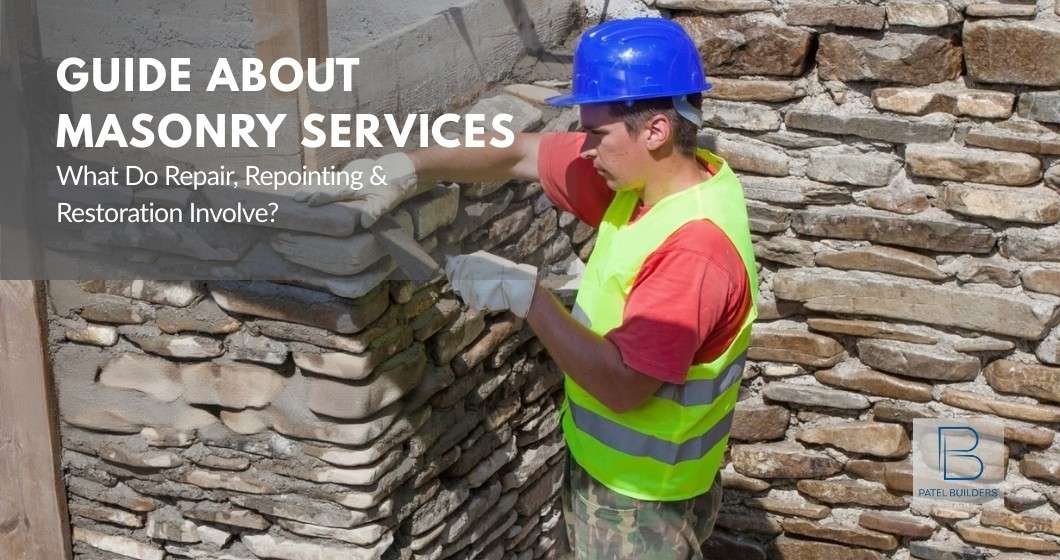
After Texas’s growth post-2010, many older brick homes and commercial buildings began showing wear from weather and shifting foundations. That wear raises clear questions about safety, leaks, and routine maintenance.
In this guide, we’ll explore what is masonry services, why repointing and restoration matter, and how to tell when a repair is enough. You’ll learn about masonry services in practical terms: common problems, diagnostic tests, repair options, timelines, and how to choose the right contractor for masonry services.
What Is Masonry Services, and Which Jobs Do Contractors Perform in Texas?
Masonry services cover installation, repair, restoration, and maintenance of brick, stone, and concrete block. Different specialists may be involved for different tasks – a masonry contractor (general masonry work), stone masons (natural stone), chimney specialists, contractors for waterproofing services, and structural engineers for major failures.
If you search for a “masonry contractor near me”, you’ll often find teams that handle both small repairs and larger restoration work.
Common masonry jobs you’ll see in Texas:
- Brick repointing (renewing mortar joints).
- Brick or stone replacement (sometimes called a dutchman repair).
- Lintel replacement (support above openings).
- Chimney repair or rebuild.
- Retaining wall repair and rebuilding.
- Veneer installation and repair.
- Wall anchors, ties, and stitching to stabilize bulging walls.
- Historic masonry restoration, when older or landmark buildings need careful, period-appropriate work.
- Waterproofing and flashing work tied to masonry.
At Patel Builders, we offer masonry, waterproofing, and roofing services among our building solutions. We handle residential and commercial projects and offer inspections and remediation.
What Problems About Masonry Services Should You Watch For?
Inspect masonry visually every 1–3 years and after major storms. Look for signs below, note the location and date with photos, and classify severity so you know when to act immediately, arrange a professional inspection, or schedule routine maintenance.
- Spalling: Outer brick faces flake or crumble. This often means freeze-thaw damage or moisture harm.
- Cracks: Vertical or stair-step cracks in walls, chimneys, or mortar can show foundation shift or settling.
- Bulging walls: Outward bowing needs fast attention. It may mean failing ties or bond problems.
- Efflorescence: White powder shows salts moving through masonry with water.
- Missing mortar: Gaps allow water to enter and worsen damage.
- Water stains and mold: Indicate failed flashing, clogged weep holes, or roof issues tying into masonry.
How Do Masonry Contractors Diagnose Issues in Texas (What Tests Do They Run)?
Knowing what is masonry services before inspections makes it easier to follow recommendations and compare quotes. Contractors and engineers follow a stepwise approach. The goal is to identify root causes (moisture entry, corrosion, foundation movement, material failure) so repairs address those causes, not just symptoms.
- Visual inspection: A trained mason checks patterns of damage, mortar condition, and flashing.
- Moisture meter: Gives a quick read on damp areas behind masonry.
- Tapping tests: Sounding bricks helps find hollow or delaminated units.
- Mortar analysis: Lab testing or on-site comparison finds compatible repair mixes.
- Core samples and structural review: For severe or unclear failures, an engineer or contractor may take samples or run structural checks.
A professional report usually includes photos, a clear scope of work, recommended methods, and cost bands for repair options.
What Masonry Repair Methods Exist in Texas and When Is Each Used?
Here are some of the top repair methods that are being used in Texas by contractors. However, the most suitable method for your masonry work depends on the damage type and building use.
- Repointing vs tuckpointing: Repointing means removing failing mortar and replacing it with new mortar. It restores the joint and weatherproofs the walls. (Lifespan: 15-40 years)
Tuckpointing is a cosmetic approach that uses a thin contrasting line to make joints look neat. Choose repointing when mortar is failing; tuckpointing when joints need a visual refresh. (Lifespan: 10-25 years)
- Brick/stone replacement (dutchman): A dutchman repair replaces only the damaged brick or stone with a new, matched unit. This keeps most of the wall intact and looks right when matched. (Lifespan: 25-100+ years)
- Wall anchors and stitching: Anchors and stainless-steel ties hold bulging or separating veneers to the backup wall. Stitching repairs cracked sections with metal or composite reinforcement. (Lifespan: 25-50+ years)
- Lintel replacement: Lintels are metal or concrete supports over openings. When rusted or failed, they must be replaced to keep the wall above stable. (Lifespan: 25-75 years)
- Chimney rebuilds and crown repair: Crowns, flues, and caps keep water out. When crowns or bricks fail, partial rebuilds or full chimney rebuilds protect the roof and interior. (Lifespan: crown repair 5-25 years, full rebuild 50-100+ years)
How Long Will Masonry Repair Take, and What’s the Typical Project Timeline?
Masonry project duration is driven by scope, access, diagnostics and approvals, and weather/cure needs.
→ Quick repairs (dutchman, small tuckpointing): 1–3 days.
→ Moderate jobs (chimney repair, small repoint sections): Several days to a week.
→ Large repointing or multi-story facades: A few weeks, often staged by sections.
→ Full restoration or structural rebuilding: Weeks to months, especially if engineering, permits, or phased occupancy is involved.
Factors that affect the schedule:
- Scaffolding setup and safety planning.
- Weather and curing time for mortar and waterproofing.
- Material sourcing, brick matching, and lead times.
- Inspection and engineering reviews when the structure is involved.
How to Choose the Right Masonry Contractors in Texas: 10-Point Checklist
Use this checklist during calls, on-site visits, and when you get written estimates. Ask for documents and write down answers. Keep copies.
- License and insurance: Confirm contractor and any subcontractors are licensed and carry liability and workers’ compensation.
- Local references: Ask for nearby Texas projects and contactable owners or managers.
- Written estimate and scope: Get clear steps, materials, and limits in writing.
- Material samples: Ask to see mortar and brick/stone samples and color matches.
- Structural review: For major work, insist on an engineer review and report.
- Timeline and staging: Confirm scaffolding, noise, and access plans.
- Safety plan: Fall protection, barriers, and site cleanup matter.
- Warranty and maintenance: Get workmanship and material warranties in writing.
- Photos and documentation: Request before, during, and after photos for records.
- Clear payment schedule: Avoid large upfront full payments; tie payments to milestones.
Red flags:
- No written scope or contract.
- Push to pay full price up front.
- No local references or poor reviews.
- Unwillingness to match mortar or show samples.
Preserve Your Building’s Value – Schedule an Inspection With Patel Builders Now!
To sum up, repointing, brick or stone replacement, anchors, and full restoration fix different masonry problems. Regular masonry inspection and proper diagnosis stop small issues from growing. Repair timelines range from days to months, depending on the scope.
Choose a licensed local contractor like Patel Builders with samples, references, and written warranties. If you want a reliable masonry partner, contact us online or call +1 (516) 205-0420 for a free quote.
Frequently Asked Questions
1. How much does repointing cost per square foot in Texas?
Repointing costs in Texas depend on the brick type, joint condition, and accessibility of the area. On average, rates range between $6 and $12 per square foot, but prices may rise for historic structures or hard-to-reach façades. Proper repointing involves removing damaged mortar and applying a compatible mix to restore both appearance and structural integrity.
2. How much does chimney repair cost in Houston?
Chimney repair costs vary widely based on the issue, from simple mortar repairs to rebuilding damaged sections. In Houston, minor repairs can start around $300–$600, while extensive restoration or structural work can exceed $1,500. The final price often depends on the chimney’s height, material, and the extent of weather-related deterioration.
3. Do masonry services include facade restoration and cleaning?
Yes, many masonry contractors provide facade restoration, cleaning, and protective sealing as part of their services. Restoration may include replacing damaged bricks, repointing joints, and gentle cleaning using low-pressure or chemical methods. Regular facade maintenance not only improves appearance but also prevents moisture penetration and surface decay in older buildings.
4. What mortar mix works best for older brick homes in Texas?
Older brick homes require a soft, lime-based mortar that closely matches the original composition. Modern cement-rich mixes can be too rigid, causing bricks to crack over time due to thermal expansion. A traditional lime-sand blend allows flexibility, breathability, and compatibility with vintage masonry, ensuring long-term preservation in Texas’ variable climate.